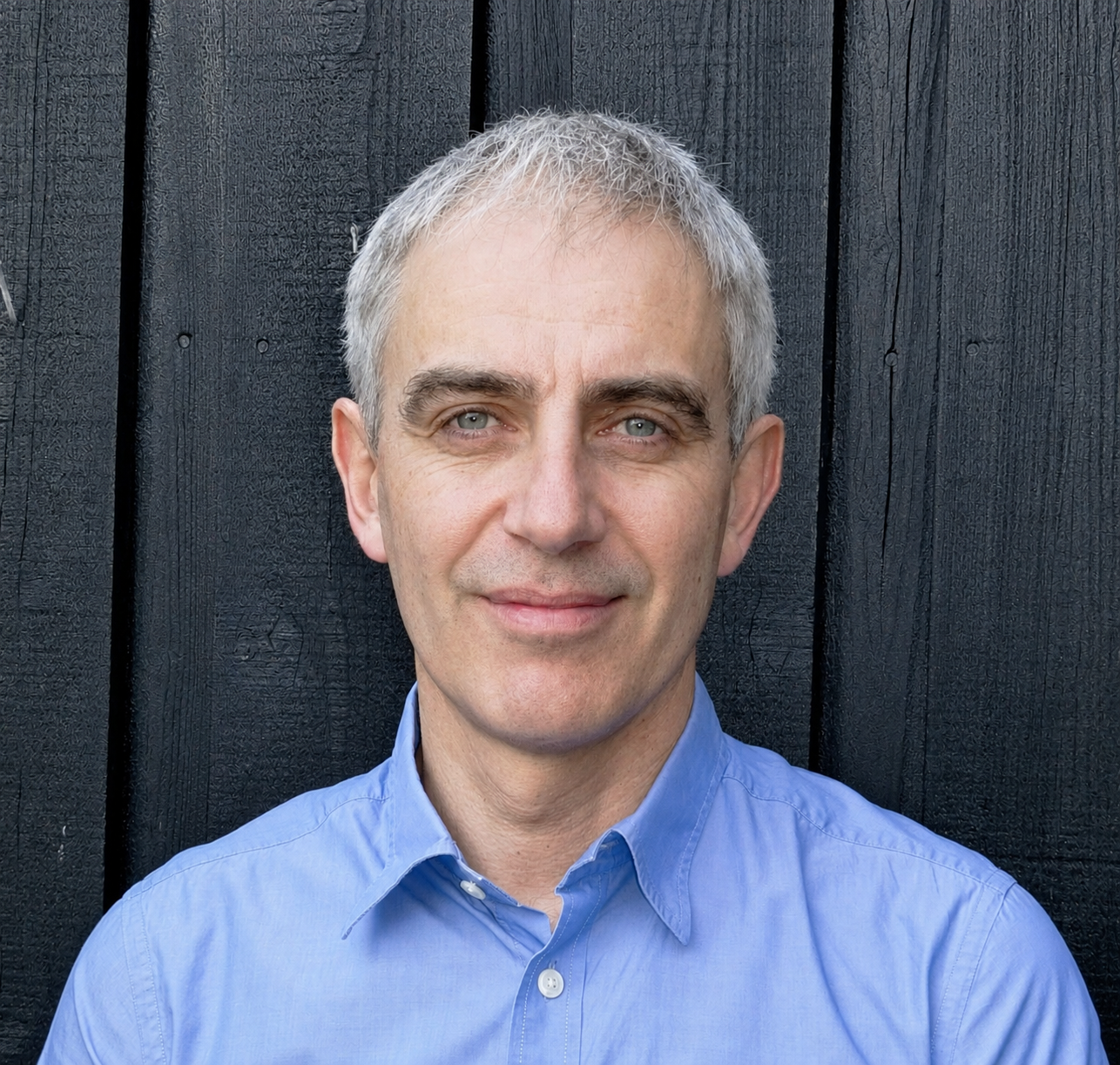
CEO, VERIGRAFT
Chronic venous insufficiency affects an estimated 150 million people worldwide, yet the clinical toolkit has barely moved in decades. Compression garments. Ablation. Repeat interventions. The underlying problem—failing venous valves—has resisted every attempt at synthetic replacement, largely because the venous environment punishes foreign material with thrombosis, and because rebuilding a valve with mechanical precision at biological scale has proven intractable.
VERIGRAFT, a Swedish biotech that recently finished its Phase 1/2 clinical program in Seville and other Spanish cities, believes it has solved both problems at once. Its lead asset, P-TEV, begins with donated human venous tissue, strips it of its cellular identity, and reconditions it over seven days using a small blood draw from the patient—producing a graft that the immune system reads as self. One early patient has been walking freely for more than two years. Petter Björquist, VERIGRAFT’s chief architect, sat down with Vanguard to explain why the biology had to come first, and what a cure rather than a management strategy actually looks like for patients in the most severe stages of the disease.

Moe: Why has restoring functional venous valves been considered beyond reach until now?
Petter Björquist: All the synthetic materials we have used in the arterial system cannot be used in the venous system—the risk of thrombosis is too high. Synthetic materials are very thrombogenic, so they don’t fit well in the venous environment.
The second reason is that the real cause behind CVI is failing valves. To construct valves from synthetic or mechanical material has proven very complicated and very costly. Our approach is to go the strictly biological, natural way. Our material is 100% biology.
No one else has really had a good technology to change the identity of a biological graft—and that is necessary. If you simply take something from a donor and place it in a patient, the immune system will start the rejection process. If you don’t change the identity as we do, you will not be successful. We have been able to do that with a very elegant method.
Moe: Why did VERIGRAFT choose decellularization and blood-based reconditioning over other personalization approaches?
Petter: Decellularization itself is nothing we invented—that has been known for decades. But then we come to the key point: adding the new identity, what some call re-cellularization. We prefer to call it the reconditioning process.
The idea of adding new cells has also been around for decades. One very classical approach is to identify useful cells in the patient—very often stem cells, for example via the mesenchymal stem cell route, sourced from bone marrow. You take a syringe, extract the bone marrow, identify the cells in that material, isolate them, put them in culture, expand them. This takes months, leads to very high costs, and regulators are genuinely questioning it—handling cells for months in vitro creates potential problems, including concerns around cancer cells.
We took a completely different angle. We said: why not use a much better source, and that is blood. We take a small sample from the patient—50 to 60 milliliters. Blood is a great material. We don’t isolate cells from it. We add what we call enhancing factors to speed up the process. And the result is that a patient can leave blood and then start surgery in as little as 10 days. The reconditioning process itself is only one week—seven days.
That brings this to a new level. We can industrialize, produce at scale, at costs that are reasonable. And regulators can see we are not culturing cells for months in vitro. We are doing this quickly and efficiently.
On the synthetic comparison: this is the patient’s own material. It’s only biology—no synthetic components, nothing that is not purely biological. When we transplant, the material is recognized by the patient as their own. We have seen that within weeks, the material is incorporated and becomes a lifelong part of the patient’s biology.
“We have seen that within weeks, the material is incorporated and becomes a lifelong part of the patient’s biology.”
Moe: How does what you observed in your first P-TEV patient differ from what preclinical models predicted?
Petter: In our preclinical models—large animals, pigs, for example—we could open up, look at the material under a microscope, and really study it. That is of course not possible with a human patient. We cannot open up and take it out and study it under the microscope.
What we can do is follow the patient with the classical procedures a vascular surgeon uses—ultrasound, and so on. And we see that everything looks good. We see that blood is flowing, the valves are working, the remodeling process has worked with the material. Over time, it really becomes an indistinguishable part of the patient. You can see that you’ve added a body part that they will carry lifelong, as part of their biology.
Moe: How does VERIGRAFT plan to sustain donor supply if patient demand scales to the millions this market represents?
Petter: First, it’s important to remember that we are not dependent on the same type of donors who give a heart, a liver, or a kidney. Those are organ donors—heart-beating donors—because the organ must be retrieved while the donor is alive. Our material is different. The first thing we do is decellularization, so we kill off all the cells that are there anyway. Our donors are cadaveric donors. A donor giving us a vein can have been dead for up to 72 hours. So that significantly widens the potential donor pool.
We are also tapping into a tissue donation system that has been around for a long time. Corneas, for example, are retrieved from the same type of donor and follow a similar pathway. That system exists and can be scaled further.
At the same time, you have a point—at some point we may run into a donor limitation. To avoid that, we have been working for many years on two additional sources for the starting material. The first is animal donors. Our process starts with decellularization, then we add the patient’s own biology, so we can very efficiently begin with animal material—bovine arteries, for example. Those animals can also donate arteries that can be reconditioned and used.
The third step is printing. When we decellularize donated material, we end up with a scaffold that consists only of proteins—and that is relatively straightforward to print. We are not talking about bioprinting; we are talking about 3D printing, only proteins. We have a quite advanced project where we are 3D printing scaffolds, for example for arteries. In the future, we envision having a printer that supplies the stock material. Then you put our reconditioning process on top of that, and the outcome is a graft ready to be transplanted.
Moe: How does the 3D-printed scaffold coexist with P-TEV—are they solving different problems, or is one eventually meant to replace the other?
Petter: They solve different problems, yes. Our lead asset, P-TEV, is targeting CVI, and the mode of action there is not the vessel itself—it’s the valves, these valves that open and close and regulate the blood. Interestingly, no animals have a similar type of valve. So for CVI, we need to start with human donation.
Our next product is an artery replacement graft, and that’s exactly the area where animal material and printed grafts come in. For arteries, it’s more of a simple tubular structure—bypasses around the heart, bypasses over the knee for people with peripheral arterial disease in the leg. Those indications can be perfectly suited for our printed material.
“For CVI, the mode of action is not the vessel itself—it’s the valves. Interestingly, no animals have a similar type of valve.”
Moe: Why does a successful P-TEV implant change daily life for patients who have spent years managing venous ulcers?
Petter: CVI progresses from grade one through to grade six. The most severe forms—grades five and six—are characterized by leg ulcers. When you are in that stage, your life is really complicated. You are typically on sick leave or early retirement. You can’t walk properly. You can’t do things like the rest of us—swimming, hiking, whatever. Quality of life is typically poor; these patients score very low on quality of life scales.
We think that getting these symptoms away—which we have started to prove now—will put the patient in a completely new situation. They can start working again, they can start doing sports and exercise. They will go from sitting at home, deprived, back to more or less a normal life. That is how we see the future for patients with CVI.

Petter Björquist is Chief Executive Officer of VERIGRAFT, a Swedish biotech developing personalized biological vascular grafts for chronic venous insufficiency and beyond.

Moe Alsumidaie is Chief Editor of The Clinical Trial Vanguard. Moe holds decades of experience in the clinical trials industry. Moe also serves as Head of Research at CliniBiz and Chief Data Scientist at Annex Clinical Corporation.