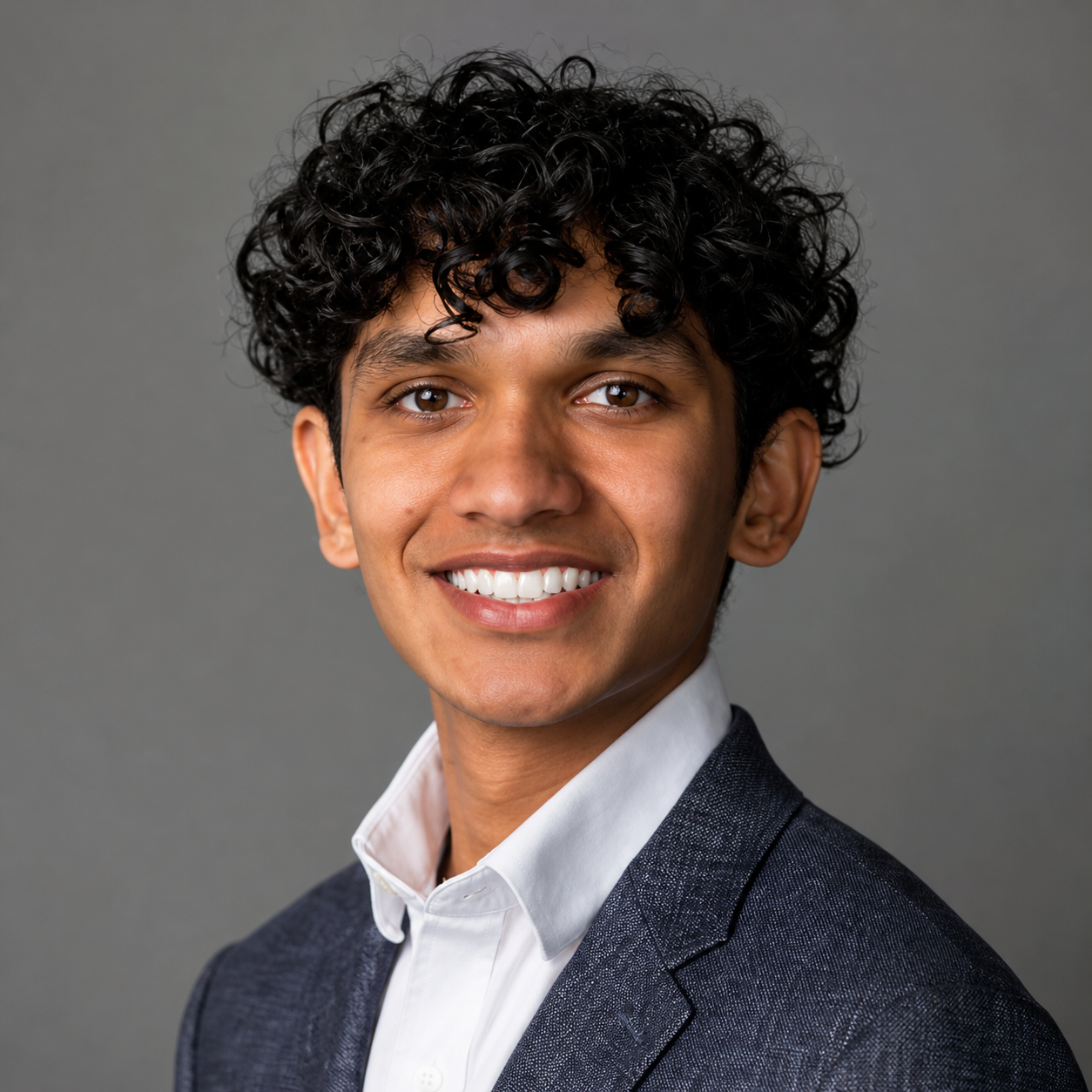
Co-founder, Convexia Bio
A Stanford-founded startup is betting that the next AI-native pharma company will not just sell software. It will use AI agents to operate leaner, identify overlooked rare disease assets, and develop programs that traditional pharma economics often leave behind.
The math of rare disease drug development has always been brutal: a therapy serving 5,000 to 10,000 patients simply cannot generate the peak sales a 500-person BD team needs to justify its own existence. So assets get shelved. Assets from China-based biotechs may receive less systematic review. Early-stage compounds age out of consideration. The patients behind those numbers wait. Ayaan Parikh, co-founder of Convexia Bio, is building a company around the premise that this isn’t an inevitability — it’s an inefficiency. By replacing the traditional BD department with a suite of specialized AI agents, Convexia is targeting a cost structure lean enough to make $50–150 million in peak sales not a consolation prize, but a viable return. The model carries real tensions — the company simultaneously sells diligence tools to pharma customers and plans to acquire assets itself — but Parikh argues the market is large enough that competition isn’t the right frame. What follows is an edited conversation about the architecture behind that bet, the asset categories established BD teams are missing, and what it actually means for a patient when an overlooked drug finds its way to market.

Moe: Why did pharma business development become the problem you couldn’t walk away from?
Ayaan Parikh: My co-founder and I had the experience of being able to work on quite a few ideas. As AI became more prevalent and stronger, it became abundantly clear to us that the next generation of AI-native companies would not stop at selling software. They would use software, agents, and data infrastructure to deliver the end outcome directly.
As we explored different verticals where it made sense to provide those services, pharma stood out as a place where there was great capacity to use AI tools and agents to make real decisions. From finding drug assets to running clinical trials to commercializing, we kept asking: how much can you build AI agents around each of those capabilities and improve the efficiency of running those processes? When you think about a fully vertical business, pharma is one of those areas where it was very antiquated, very left behind. There was real room to go fully vertical.
We were working at Stanford before this, and it became pretty clear that a lot of the ways pharma BD teams and biotech VCs were running diligence was abundantly slow, inadequate, and even very biased. That opportunity became very clear to us.
Moe: Why six specialized agents rather than one general diligence system?
Ayaan: The thing we sacrificed the most was broad applicability. Instead of building a one-input, one-output system, we built a set of specialized agents. That structure lets us break down why a certain drug might not be succeeding, rather than making it a black box where the real reasons become hazy and convoluted. With our approach, it’s clear whether something isn’t working for commercial reasons, clinical reasons, or scientific reasons. The agents do not replace scientific, clinical, or commercial judgment. They structure the diligence, surface evidence, identify failure modes, and make the tradeoffs explicit so human decision-makers can move faster with a clearer audit trail. All of those feed into a final probability of success that takes everything together and provides a final output.
We structured it that way to replicate how current pharma BD teams actually work. The agents map roughly to the core diligence workstreams: asset discovery, biology, clinical development, regulatory path, commercial opportunity, and transaction strategy. Those teams are split up into similar departments, and that’s how we structured our agents.
“It becomes clear whether something isn’t working for commercial reasons, clinical reasons, or scientific reasons. All of them feed into our final probability of success.”

Moe: Why are established BD teams missing the inventory your asset discovery agent is finding?
Ayaan: The most important areas where many pharma BD teams are getting very little visibility are three key categories. One is Chinese assets in general. Two is early-stage preclinical assets. And three is shelved assets. That’s where our tool is most effective — because of the various levels of reasoning and visibility we have into different data sources.
Within each of those categories there are obviously different specifics — assets coming out of tech transfer offices, for example, are another area where a lot of existing pharma BD teams don’t get too much visibility. Some mixture of those three areas is where most pharma BD teams and biotech VCs have the least visibility.
Moe: How do you avoid Convexia becoming a direct competitor to your own paying customers when you’re both hunting the same assets?
Ayaan: We are very explicit about separating customer work from our internal asset strategy. Customer diligence remains customer-confidential, and we do not use proprietary customer priorities or deal flow to source assets for ourselves.
The overlap is also lower than it may appear. Our internal thesis is focused on a specific class of rare disease assets where our cost structure allows us to underwrite programs that are often too small for traditional pharma economics. Pharma is a large market, but the more important point is that our internal acquisition strategy is narrower than the general diligence work we support for customers.
Moe: How does the BioSecure Act’s December 2026 designation window shape the deals you’re willing to structure around Chinese assets right now?
Ayaan: The core thesis does not change, but the diligence bar is higher. For China-originated assets, we pay close attention to counterparty risk, data rights, manufacturing dependencies, transferability of the IND-enabling package, and whether the program can be developed under a structure that is robust to regulatory change.
We are not pursuing China-based assets because they are China-based. We are pursuing overlooked rare disease programs where the science, economics, and development path still make sense after that additional diligence. If a China-originated program has unresolved supply-chain, data, or transferability risk, that affects how we value it and whether we pursue it at all.
Moe: How does your model change outcomes for the patient whose drug nearly disappeared?
Ayaan: Many of the assets we’re pursuing are for disease indications that aren’t being pursued right now, simply because the indication size or peak sales isn’t large enough to justify investment by big or even mid-to-small-cap pharma companies. A rare disease with around 5,000 to 10,000 patient cases in the US per year will likely not return a remarkable investment for a big pharma company running a 500-person BD team.
Our model is fundamentally different. We have maybe 5 to 10% of the team that traditional pharma BD teams have, but we run everything through AI agents. So for us, even $50 to $150 million in peak sales is still a great return — which is why we’re able to enter this entire new market. The end result is that programs which might otherwise remain shelved can move toward patients, especially in indications where the patient population is meaningful but the commercial opportunity is too small for traditional pharma infrastructure.
“Programs which might otherwise remain shelved can move toward patients, especially where the patient population is meaningful but the commercial opportunity is too small for traditional pharma infrastructure.”
Moe: Is there anything you’d like to add?
Ayaan: I think we’re at an interesting in-between stage right now. Previously we worked pretty closely with a lot of pharma BD teams and biotech VCs. Now we’re at a point where we have quite a lot of differentiated data and analysis that allows us to take that context and pursue our own drugs. Previously, we were closer to an intelligence layer for life sciences BD and diligence. Now we are using that infrastructure to build a hub-and-spoke pharma model around assets we believe are overlooked by traditional development economics.
What we’re most excited about is that because our model allows us to operate with a very lean team, we’re able to pursue drug assets that otherwise aren’t being pursued. That’s a pretty exciting thing — for us and for patients.
Ayaan Parikh is co-founder of Convexia Bio, a Stanford-founded startup applying specialized AI agents to pharmaceutical asset discovery, diligence, and development.

Moe Alsumidaie is Chief Editor of The Clinical Trial Vanguard. Moe holds decades of experience in the clinical trials industry. Moe also serves as Head of Research at CliniBiz and Chief Data Scientist at Annex Clinical Corporation.