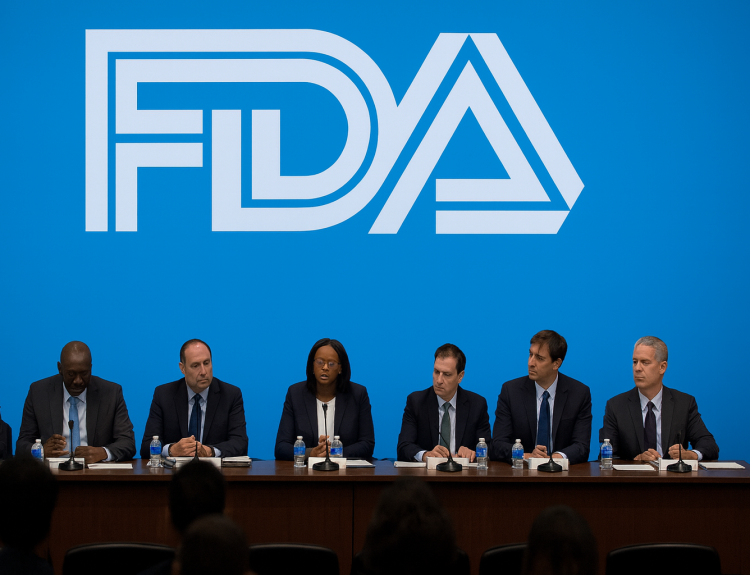
A China BIO session built around anonymous survey data from BD heads and senior dealmakers put hard numbers behind what many in the industry have sensed for years: Western pharma’s appetite for China-origin assets is not slowing down. The panel featured Irene Hong, Founding Partner at CEC Capital; Rama Padmanabhan, M&A Partner at Cooley; Yves Wyckmans, International Business Development Lead at Biogen; and Moustapha El-Amine, VP and Head of Business Development at Insmed. Moderator Nnenna Ohaka-Akpalaba of BioXconomy led the discussion.
Deal Volume Has Grown at a Triple-Digit Clip
China-origin out-licensing deals reached 125 transactions last year. That was an 81% increase year over year. The CEC Capital representative put the trajectory in context: the compound annual growth rate for China-origin deals since the first major transaction in 2017 — the Legend Biotech and Johnson & Johnson deal — has been 111%.
China-origin assets now represent an estimated 30 to 40% of all assets being transacted globally. That share was effectively zero nine years ago. The drivers are straightforward: lower cost, faster development timelines, and quality that has steadily closed the gap with Western standards.

Nearly 80% of survey respondents said they expect their 12-month China partnering outlook to increase. The Cooley partner noted that where there is an abundance of assets and a looming patent cliff, deal flow follows. Pharma simply cannot afford to bypass an entire jurisdiction.
Partnering Leads, But Structure Is Evolving
Respondents showed a clear preference for licensing deals over outright M&A. The Cooley representative explained this is less binary than it appears. Partnering deals increasingly function as a stepping stone toward acquisition. Upfront payments on partnering deals have been rising, making some look closer to disguised M&A.
For a mid-sized company like Insmed — currently valued at roughly $35 billion with ambitions to reach $100 billion within five years — in-licensing from China is central to its inorganic growth strategy. The Insmed representative described the challenge plainly: with approximately 60 STAT6 programs in China alone, identifying differentiated assets requires significant filtering. The priority is de-risked, fast-follower clinical assets that can be brought back to the US market.
Newer deal structures are also gaining traction. Build-to-buy and option-to-acquire models allow buyers to secure optionality without committing to full valuation upfront. Reverse mergers — once dismissed as a fallback — have become a legitimate route to public markets, with several completed deals involving China-based companies listing on NASDAQ.
Pricing Pressure and Policy Risk Are Real, Not Hypothetical
IP enforcement ranked as the top policy concern in the survey. The CEC Capital representative called this an outdated fear. Companies with deep China experience largely no longer question IP safety, pointing to decades of CRO partnerships as evidence. Those still concerned tend to be newer entrants with limited on-the-ground knowledge.
China’s volume-based procurement policy — known domestically as Jitai — is a more active concern. The Insmed representative described a firsthand lesson: an attempt to establish a commercial footprint in China was quickly reversed after NRDL negotiations required discounts of 70 to 80%. For smaller companies, the economics of local commercialization do not yet work. The CEC Capital representative noted the policy has reshaped portfolios across both foreign and domestic companies, pushing many toward VBP-resistant product categories.

The Biosecure Act came up repeatedly as a structural risk to monitor. The Insmed representative noted it has been under discussion for nearly eight years and has yet to be meaningfully enforced. Still, companies are building contingency plans. Insmed’s approach includes identifying backup supply chains and preparing bridging studies — roughly $20 million and 50 patients in a market like Australia — to satisfy regulators if Chinese clinical data faces acceptance hurdles.
China’s Next Challenge Is Innovation, Not Execution
The panel broadly agreed that China has mastered fast-follower drug development. The harder question is whether that infrastructure can support true first-in-class innovation. The CEC Capital representative noted a clear shift: five years ago, claims of first-in-class assets from China were met with skepticism. That skepticism has largely faded.
Around 30% of global R&D spending now flows through China, according to the Biogen representative. The therapeutic scope has widened from oncology into immunology, nephrology, and early-stage rare disease programs. Returning scientists trained abroad, a maturing CRO ecosystem, and boards that have now seen multiple deal cycles are accelerating the shift.
The Insmed representative framed the real test ahead: discovery-to-IND in under two years is achievable today for fast followers. Whether that speed advantage holds as Chinese companies move into genuinely novel biology remains an open question. The panel’s consensus was that first-in-class breakthroughs from China are coming — the timeline is uncertain, not the outcome.
For Western companies still weighing whether to engage, the CEC Capital representative offered a blunt warning: competitors that leverage China’s clinical and manufacturing ecosystem will have a structural cost and speed advantage. Ignoring that is not a neutral position. It is a competitive disadvantage.

Moe Alsumidaie is Chief Editor of The Clinical Trial Vanguard. Moe holds decades of experience in the clinical trials industry. Moe also serves as Head of Research at CliniBiz and Chief Data Scientist at Annex Clinical Corporation.