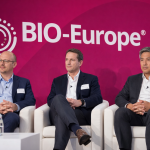
At 2025 BIO-Europe, it was clear that the pharmaceutical landscape had witnessed a significant shift in deal-making velocity, with Novartis emerging as a primary driver of industry activity, executing nearly $50 billion in transactions over the last 18 to 24 months. At the Bio-Europe conference, Susanne Kreutz, Global Head of Corporate and Business Development at Novartis, joined a featured session to detail the internal transformations and strategic pivots that have enabled this high-volume deal flow. The discussion highlighted how Novartis has transitioned toward an outcomes-oriented structure designed to eliminate bureaucratic friction and capitalize on emerging scientific frontiers, particularly in the Asia-Pacific region.
As the industry grapples with fluctuating valuations and a crowded innovation ecosystem, the ability to move with agility has become a key differentiator for top-tier pharma. Kreutz revealed that Novartis’s recent purple patch of deal-making is not merely a reaction to market conditions, but the result of a deliberate organizational redesign aimed at integrating specialized functions into a cohesive, fast-acting unit. This strategic evolution reflects a broader industry trend in which the traditional silos between licensing, early-stage venture, and mergers and acquisitions (M&A) are being dismantled to foster greater flexibility.

Integrated Vertical Structures for Expeditious Execution
A central pillar of the Novartis strategy is the creation of the Corporate and Business Development (CBD) unit, established in 2023 to unify previously disparate teams. By bringing together early-stage business development (BD) from NIBR, pharma-specific BD, oncology BD, and the core M&A team under one roof, the organization eliminated the turf wars and hand-off delays that frequently stall large-scale transactions. This streamlined entity operates through five functional verticals—Search and Evaluation (S&E), Due Diligence, Transactions (split between licensing and M&A), Alliance Management, and Finance—covering the entire deal lifecycle from ideation to post-signing management.
The impact of this structural agility is best illustrated by the organization’s ability to pivot deal types in real-time. Kreutz highlighted a specific instance involving the acquisition of Regulus, which began as a classical licensing agreement but flipped overnight into an M&A acquisition. By eliminating internal debates among departments over leadership and execution, the team completed the entire deal within a 26-day window. This capability ensures that the acquisition method remains secondary to the ultimate goal: securing the technology or asset for the broader platform.
Furthermore, the strategy relies on early stakeholder alignment to ensure certainty for both the internal team and the external partner. By engaging senior management during the initial matchmaking phase rather than waiting for a final governance meeting, the organization avoids late-stage rejections that waste resources and damage industry relationships. This transparency and clarity regarding the why behind a deal allow the organization to remain nimble in a market where timing is often as critical as the science itself.
Data Robustness and the Shift to Hybrid Value Models
While organizational structure facilitates speed, the quality of the underlying science remains the non-negotiable foundation of the Novartis partnership model. The organization maintains a strict focus on first-in-class or best-in-class differentiated assets within four core therapeutic areas and five technological platforms. Kreutz noted that a recurring challenge in the current ecosystem is the lack of robust datasets, with clinical experiments or Chemistry, Manufacturing, and Controls (CMC) packages not sufficiently validated.
To bridge the gap between biotech valuation expectations and big pharma risk assessment, the industry is increasingly turning to creative financial structures. The discussion noted a significant rise in the acceptance of Contingent Value Rights (CVRs) and build-to-buy option structures. In the Regulus acquisition, for example, the deal featured a $7 per share upfront payment matched by a $7 CVR—a ratio that reflects a growing openness to sharing long-term risk and reward. This shift provides biotechs with essential non-dilutive funding while granting big pharma the optionality and early influence they require to guide development.
The Rise of China as an Innovation Powerhouse
A significant portion of the strategic discussion focused on China’s evolving role in the global clinical research and development ecosystem. No longer viewed solely as a source of incremental me-too innovation, China has become a primary origin for true innovation. Kreutz indicated that at least 40% of recent business development deals now involve assets originating in China, with the region leading in specific categories such as PD-1/VEGF combinations.
Beyond asset discovery, China’s clinical trial infrastructure has become a strategic asset for global pharma. The speed of patient recruitment and the cost-effectiveness of clinical operations in China have outpaced many other markets, prompting Novartis to declare it one of its four key global markets alongside the U.S., Germany, and Japan. To capitalize on this, the organization has significantly expanded its on-ground partnering and manufacturing teams in the region. However, this expansion also brings challenges; as the pool of assets grows, the landscape becomes increasingly crowded, making the identification of truly best-in-class assets more critical.
Future Frontiers: The Dominance of XRNA Platforms
Looking ahead, Novartis is doubling down on XRNA (RNA-based) technologies as a cornerstone of its future portfolio. The scientific rationale for this focus is the ability to silence specific genes in a durable, selective manner, addressing diseases that were previously undruggable with traditional small molecules or antibodies. The organization has systematically pursued deals in this space, including partnerships with companies like Arrowhead and Argo, spanning therapeutic areas from cardiovascular health to neurodegeneration.
The evolution of delivery mechanisms is further expanding XRNA’s potential. While early siRNA therapies were primarily liver-targeted, recent advances, such as transferrin receptor (TfR) ligands, are enabling these therapies to reach the central nervous system and muscle tissue. This technical refinement, coupled with increasingly cost-effective manufacturing, positions XRNA as a high-growth vertical for the organization.
The concluding insights from the session at Bio-Europe reinforced that the current pace of deal-making is not a temporary surge but a sustained commitment. By combining a streamlined internal machine with a focus on robust data and emerging geographic hubs like China, Novartis aims to maintain its position as a preferred partner in the biotech sector. For biotech leaders, the message is clear: success requires not just cutting-edge science, but a commitment to transparency and the delivery of rigorous data sets that can withstand the scrutiny of an accelerated due diligence process.

Moe Alsumidaie is Chief Editor of The Clinical Trial Vanguard. Moe holds decades of experience in the clinical trials industry. Moe also serves as Head of Research at CliniBiz and Chief Data Scientist at Annex Clinical Corporation.