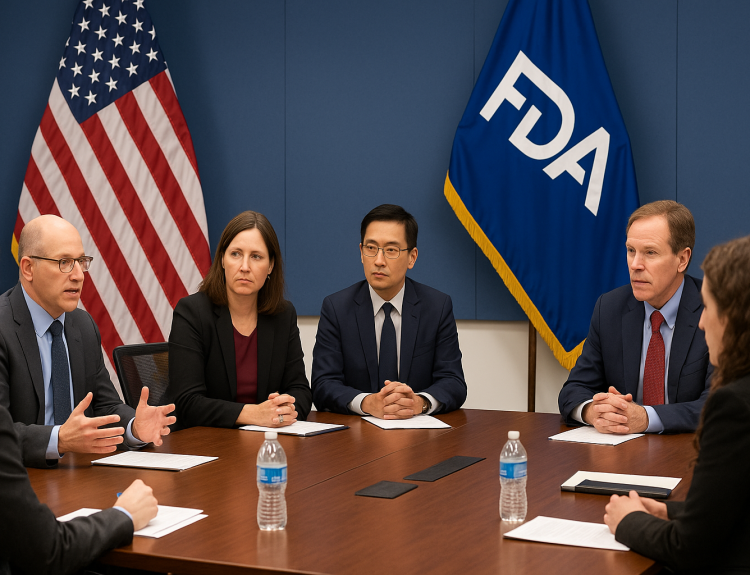
At the BIO-Europe Spring 2026 conference in Lisbon, a distinguished panel of business development and finance leaders convened to dissect the evolving landscape of pharmaceutical mergers, acquisitions, and licensing. Moderated by Linda Pullan of Pullan Consulting, the discussion featured executive perspectives from Nuno Alves of Astellas Pharma, Stacy Feld of Johnson & Johnson, Nick Gagnon of Ipsen, and Martin Slezak of Lundbeck. The session centered on how global players are recalibrating their portfolios to navigate a shifting market defined by geopolitical uncertainty, the implementation of pricing policies like the Inflation Reduction Act, and a surging wave of innovation originating from outside traditional Western hubs.

The Neuroscience Comeback and Navigating Global Volatility
A primary theme underscored during the session was the significant resurgence of interest in neuroscience, a field that many large pharmaceutical entities had de-prioritized over the last decade. Martin Slezak of Lundbeck noted that major players like GSK, Amgen, and Pfizer had previously scaled back their activities in brain health, yet the tide has turned due to high unmet patient needs and recent high-profile deal-making. Stacy Feld highlighted the acquisition of Intracellular Therapies by Johnson & Johnson as a bellwether for this comeback, alongside other notable moves such as Novartis acquiring Avidity and Sanofi’s deal with Vigil. This revitalized focus is driven by a recognition that the innovation sparked by increased capital and attention in the space is essential for addressing neurodegenerative and psychiatric disorders that carry immense societal costs.
Beyond therapeutic specificities, the discussion shifted toward the uncertain world pharma companies now inhabit. Panelists suggested that drug development is no longer just a matter of managing scientific and commercialization risks. Today, companies must layer on unpredictable factors including shifting geopolitical environments, aggressive regulatory changes, and new drug pricing policies, forcing organizations to build for resilience and optionality rather than fixed, linear development paths. Data from the Endpoint News Sentiment Index was cited to illustrate that industry pessimism is increasingly driven by these non-scientific, external factors. The experts indicated that the ability to forecast these regulatory and political shifts is becoming as critical as the science itself, necessitating a more agile approach to pipeline management.
Strategic Incubation and the Rise of Virtual Development Models
As the biotech winter transitions into a potential biopharma spring, the panel explored how the barriers to entry for starting biotech companies have evolved. While securing Seed and Series A funding remains a challenge, the infrastructure supporting early-stage innovation has become more accessible. Stacy Feld illustrated this by noting that Johnson & Johnson’s JLabs, which began 12 years ago as a physical wet-lab incubator, has successfully transitioned parts of its model to a virtual framework. In the EMEA region, this virtual approach has supported 60 companies across 14 different countries, allowing entrepreneurs to remain in their native ecosystems while accessing global mentorship. This evolution suggests that the physical location of a startup is becoming less relevant than the strength of its underlying science and its access to a global network of expertise.
The panel emphasized that strategic fit is the ultimate currency in modern deal-making. For Nuno Alves at Astellas, which scouts globally for assets in targeted protein degradation, genetic regulation, and blindness, the focus is on finding partners that complement specific internal expertise rather than broad, untargeted approaches. This rigorous selection process is evidenced by the sheer volume of interest at major conferences; for instance, the Astellas team received roughly 800 meeting requests at this event. The successful biotechs are those that demonstrate clarity in their storytelling and show a deep understanding of the partner’s pipeline gaps. Nuno Alves emphasized that establishing an internal champion within a large pharma organization requires a clear, differentiated value proposition that can be sustained through a complex internal approval process across different global regions.
Shifting Geographies: The Global Reach of Innovation
A significant portion of the dialogue focused on the geographical diversification of the innovation pipeline. While the United States remains the largest commercial market, Stacy Feld indicated that a staggering 40% of the global innovation pipeline now originates from China, with approximately 15% of 2025 deals involving China-based assets. This shift is not limited to Asia; Nick Gagnon at Ipsen observed a high quality of science emerging from Europe and other poles of innovation that were previously overlooked. This diversification requires big pharma to maintain a persistent, local presence in multiple innovation hubs to capture emerging opportunities.
However, this global sprawl presents new challenges for smaller biotechs. Nick Gagnon pointed out that many startups remain too focused on a U.S.-centric approach to development, often neglecting the complex hurdles of European market access and ex-U.S. regulatory requirements. Global partners now add value by correcting these trajectories early in the development cycle, ensuring that clinical trials are designed to meet the requirements of multiple major markets simultaneously. The discussion underscored that successful relationships are rarely transactional; they often involve years of persistent engagement before a formal acquisition or licensing agreement is signed. Stacy Feld mentioned the acquisition of Halda Therapeutics as a case study, which resulted from years of relationship building that allowed Johnson & Johnson to be among the first to hear about clinical progress, illustrating that trust and familiarity are foundational to high-value transactions.

Future Outlook: Creative Deal Structures and the IPO-M&A Cycle
Looking ahead, the panel anticipated a rise in both acquisitions and Initial Public Offerings (IPOs). With significant patent clips approaching for major pharmaceutical companies, Martin Slezak noted the consensus that Big Pharma will need to buy aggressively to plug gaps in the coming years. Panelists suggested that while the biotech funding environment is improving, companies should pursue a dual path of both M&A and IPO readiness to maintain optionality in a volatile market. The recycling of capital from successful exits back into the venture ecosystem was identified as a critical driver for the next wave of early-stage innovation.
The evolution of deal structures is also expected to continue, with a move toward increased risk-sharing. According to Nick Gagnon, this includes smaller upfront payments balanced by milestone payments or Contingent Value Rights (CVRs) triggered by de-risking events. Furthermore, the industry is seeing a validation of alternative operational models, such as hub-and-spoke financial structures and the adoption of New Alternative Methods (NAMs) in clinical trials. Martin Slezak noted that innovation is not just required in the laboratory but also in how the industry approaches financing and operational structures to improve efficiency. The FDA’s increasing openness to these novel approaches signals a potential shift in how drug development is executed and financed, potentially reducing the time and cost required to bring transformational therapies to patients.
The overarching takeaway from the session was that while scientific goals remain the primary driver, the ability to navigate the hidden sides of the industry—including supply chain resilience, AI-driven manufacturing, and complex global regulations—will distinguish the winners in the shifting market of 2026. The transition from a biotech winter to a spring is well underway, but it requires a more disciplined, targeted, and globally-minded approach to deal-making than ever before. Collaboration, early engagement, and a deep understanding of the broader macroeconomic environment are now just as important as the therapeutic potential of the assets themselves.

Moe Alsumidaie is Chief Editor of The Clinical Trial Vanguard. Moe holds decades of experience in the clinical trials industry. Moe also serves as Head of Research at CliniBiz and Chief Data Scientist at Annex Clinical Corporation.